
Choosing the right dog collar is not just about style — it’s about your dog’s comfort, safety, and health. One of the most common and important questions dog owners ask is:
How tight should a dog collar be?
A collar that’s too tight can cause pain, breathing issues, or skin irritation. A collar that’s too loose can slip off, making it unsafe during walks or outdoor activities. In this detailed guide, we’ll explain exactly how a dog collar should fit, how to measure it properly, and which collar types work best for daily wear — especially leather and personalized dog collars.
By the end of this article, you’ll know how to achieve the perfect fit and choose a collar that keeps your dog both comfortable and secure.
Why Proper Dog Collar Fit Matters
A dog collar is worn for many hours a day. If it doesn’t fit correctly, it can lead to:
- Chafing or hair loss around the neck
- Restricted breathing
- Neck pain or posture problems
- Anxiety or discomfort
- Risk of slipping out and getting lost
That’s why collar fit isn’t optional — it’s essential.
High-quality collars, especially leather dog collars, are designed to provide durability and comfort, but even the best collar needs the right fit to perform properly.
How Tight Should a Dog Collar Be? (The Golden Rule)
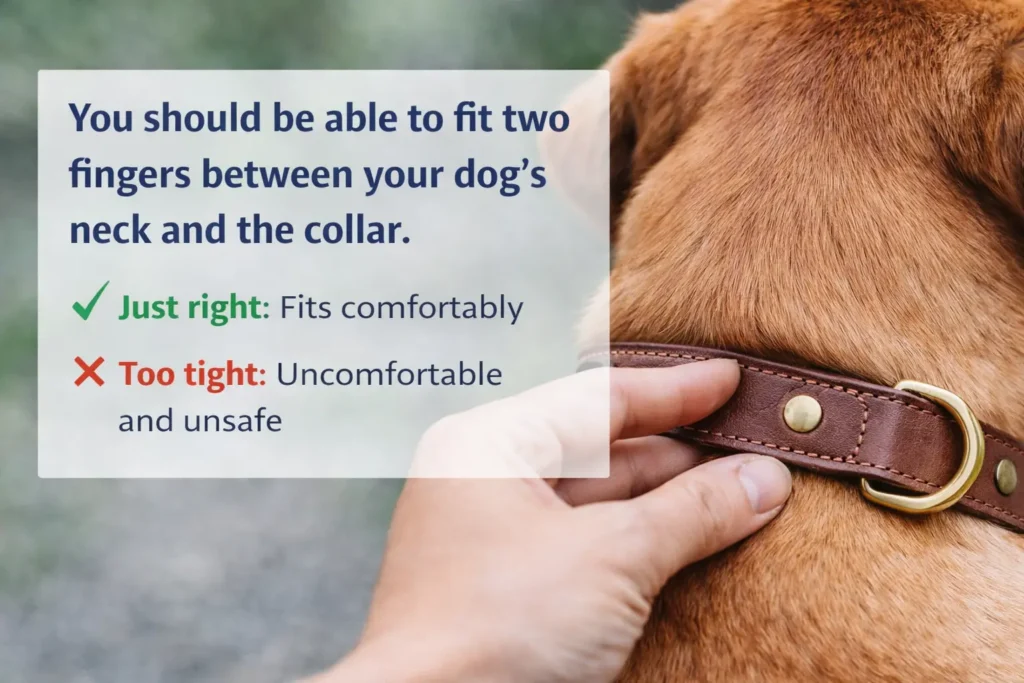
When it comes to fitting a dog collar correctly, veterinarians, trainers, and canine behavior experts all agree on one simple principle known as the two-finger rule.
👉 The Golden Rule:
You should be able to fit two fingers comfortably between your dog’s neck and the collar.
This rule ensures the collar is secure enough to stay in place while still allowing your dog to breathe, move, and rest comfortably throughout the day.
What the Two-Finger Rule Means in Practice
- Too tight:
If you cannot slide two fingers underneath the collar, it is too tight. A collar that is overly tight can cause discomfort, restrict airflow, rub the skin, and even lead to hair loss or irritation around the neck. - Too loose:
If more than two fingers fit easily or the collar moves excessively, it may be too loose. Loose collars increase the risk of your dog slipping out during walks or outdoor activities, which can be dangerous. - Just right:
When two fingers fit snugly — without squeezing or forcing — the collar provides the ideal balance between safety and comfort.
The two-finger rule works well for most dogs, regardless of size or breed, making it a reliable guideline for everyday collar use.
Step-by-Step: How to Check Your Dog Collar Fit
Checking your dog’s collar fit only takes a few seconds, but it makes a big difference in comfort and safety.
Follow these simple steps:
- Place the collar around your dog’s neck
- Buckle it normally — avoid pulling it too tight
- Slide two fingers between the collar and your dog’s neck
- Carefully observe how the collar sits
Make sure the following conditions are met:
- Your fingers fit comfortably without pressure
- The collar does not dig into the skin or leave marks
- The collar stays in place and does not rotate excessively
If the collar meets all three of these checks, it is properly fitted. It’s a good idea to repeat this process regularly, especially if your dog is still growing, gains or loses weight, or has changes in coat thickness.
Where Should a Dog Collar Sit on the Neck?
Proper placement is just as important as proper tightness.
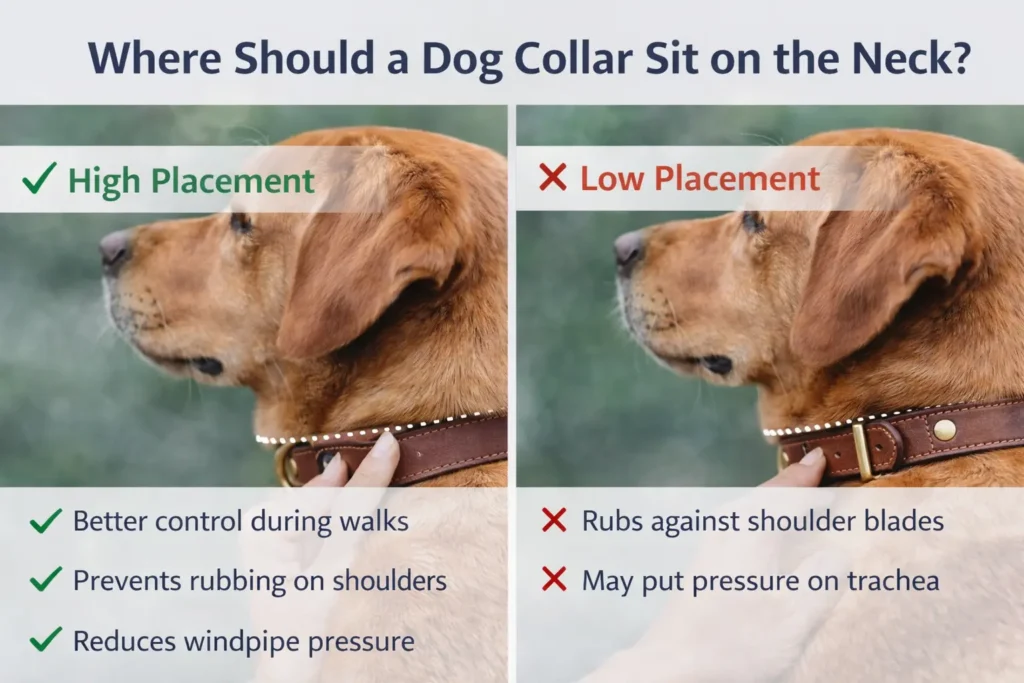
A dog collar should sit high on the neck, just below the jawline — not low near the shoulders.
Why high placement matters:
- Better control during walks:
A collar positioned higher on the neck allows for better communication and control without excessive pressure. - Prevents rubbing and chafing:
Collars placed too low often rub against the shoulder blades, leading to discomfort and skin irritation over time. - Reduces pressure on the windpipe:
A correctly positioned collar avoids unnecessary strain on the trachea, especially for dogs that tend to pull.
This placement is particularly important when using leather dog collars, as leather naturally softens and molds to the shape of your dog’s neck over time, creating a secure yet comfortable fit.
Explore premium options in the leather dog collar category here: Leather dog collar
How Often Should You Check Collar Tightness?
A dog’s collar fit is not something you set once and forget. Dogs naturally grow, gain or lose weight, and experience coat changes throughout the year, all of which can affect how a collar fits.
To keep your dog comfortable and safe, follow these general guidelines:
- Every 2–4 weeks for adult dogs
Even adult dogs can experience subtle changes in weight or muscle tone that affect collar fit. - Weekly for puppies
Puppies grow rapidly, and a collar that fits well today may become too tight in just a few weeks. - After grooming or coat trimming
A freshly trimmed coat can make a collar suddenly feel looser, increasing the risk of slipping off.
Regular checks help prevent discomfort, skin irritation, and accidental escapes during walks or outdoor activities.
If your dog is wearing a personalized leather dog collar, routine fit checks are especially important. A properly adjusted collar keeps the nameplate centered, readable, and secure, ensuring your dog’s identification is always visible.
Browse personalized options here:
Dog Collar Fit for Puppies vs Adult Dogs
Not all dogs have the same collar-fitting needs. Puppies and adult dogs require different approaches to ensure comfort and safety.
Puppies
Puppies grow fast, especially during their first year, which means collar sizing needs extra attention.
- Grow quickly and unpredictably
- Require frequent resizing or adjustments
- Should never wear a collar that feels tight “for now”
Buying a collar that is too tight with the expectation that your puppy will “grow into it” can cause discomfort and restrict movement. Instead, choose an adjustable collar and check the fit often.
Adult Dogs
Adult dogs typically have more stable body sizes, allowing for a more consistent collar fit.
- Size remains relatively stable
- Comfort and durability become the main priorities
- Leather collars are ideal for long-term daily wear
High-quality leather collars soften over time and adapt naturally to the shape of your dog’s neck, making them a reliable and comfortable option for adult dogs.
If you’re using a nameplate collar, adjustable leather designs are an excellent choice, such as a leather dog collar with name plate:
Does Collar Material Affect Fit?
Yes — material plays a big role in how a collar feels and fits over time.
Leather Dog Collars
✔ Softens with use
✔ Molds to dog’s neck
✔ Long-lasting and comfortable
Recommended styles:
Nylon Collars
- Lightweight
- Less forgiving if fitted too tight
- Can cause rubbing over time
For a full comparison, read: Leather vs nylon dog collar
Signs Your Dog’s Collar Is Too Tight
Watch for these warning signs:
- Red marks or hair loss
- Difficulty breathing
- Excessive scratching
- Whining when collar is touched
- Collar leaving deep impressions
If you notice any of these, loosen the collar immediately or switch to a soft leather dog collar for better comfort.
Signs Your Dog’s Collar Is Too Loose
A loose collar can be just as dangerous. Signs include:
- Collar slipping over the head
- Dog backing out during walks
- Tags hanging too low
- Collar rotating excessively
A properly fitted personalized dog collar with a name plate stays centered and secure, improving safety and identification.
Are Personalized Dog Collars Safe to Wear Daily?
Absolutely — when fitted correctly.
Personalized leather dog collars are designed for:
- Daily walks
- Identification
- Comfort and durability
Nameplate collars reduce noise from dangling tags and keep vital info visible at all times.
Explore personalized options here:
Handmade Leather Collars and Fit Accuracy
Handmade leather collars often offer:
- Better craftsmanship
- Softer edges
- More precise sizing
Because they’re carefully crafted, they maintain shape and comfort longer.
Learn more about handmade designs here:
Common Dog Collar Fit Mistakes to Avoid
- Buying based on breed size only
- Skipping regular fit checks
- Tightening to stop pulling
- Ignoring weight or coat changes
- Using worn-out collars
A well-fitted leather collar paired with proper training is always better than overtightening.
Frequently Asked Questions
Can a dog sleep with a collar on?
Yes, if the collar fits properly and is made from soft material like leather.
Should I loosen my dog’s collar at home?
Some owners remove collars indoors. If kept on, ensure it remains comfortably fitted.
Is leather better for long-term wear?
Yes. Leather adapts to your dog’s neck and provides superior comfort over time.
Final Thoughts: The Perfect Collar Fit Makes All the Difference

So, how tight should a dog collar be?
Tight enough to stay secure — loose enough to stay comfortable.
The right fit combined with a high-quality leather or personalized dog collar ensures your dog stays safe, stylish, and comfortable every day.
If you’re looking for durable, comfortable, and perfectly crafted options, explore the full collection at EliteDogCollar:
A well-fitted collar isn’t just an accessory — it’s a commitment to your dog’s well-being 🐾
Thankyou For reading.