How To Choose the Right Dog Collar is not just about style. It’s about your dog’s comfort, safety, behavior control, and long-term health.
Many dog owners underestimate how important the right collar can be. A poorly fitted collar can cause breathing restriction, skin irritation, hair loss, neck strain, and even long-term behavioral resistance. On the other hand, the right collar can improve training, enhance safety, and make everyday walks more enjoyable for both you and your dog.
In this complete guide, you’ll learn:
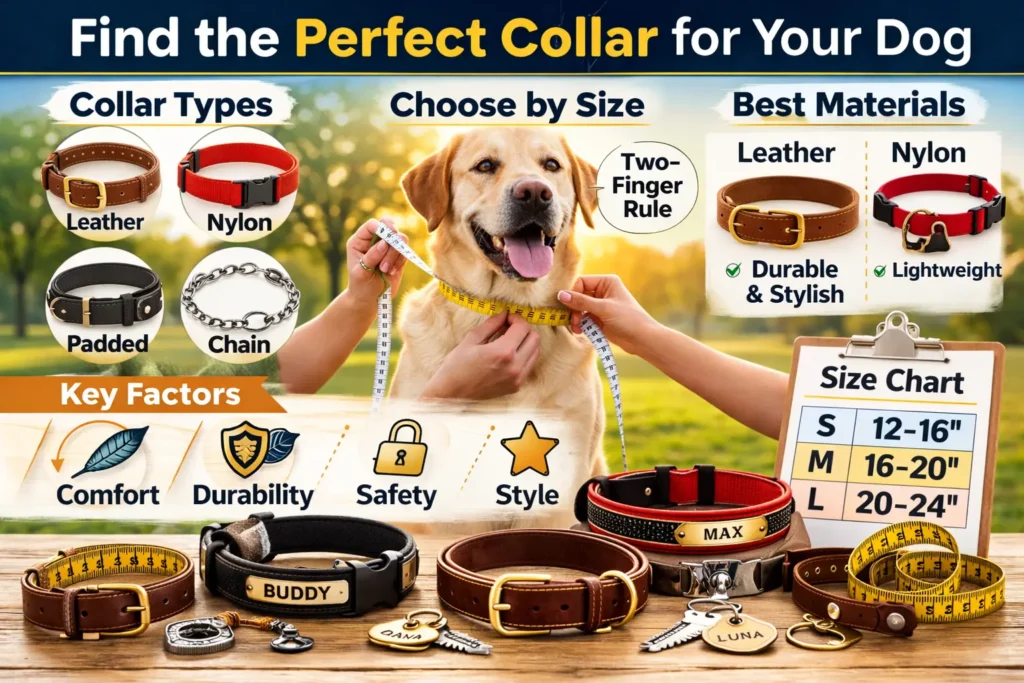
- How to measure your dog properly
- Different collar types explained
- Best material options (Leather vs Nylon vs Others)
- How to choose based on size & breed
- How to ensure correct fit
- When to upgrade or replace
- Mistakes most owners make
- Expert buying tips
Let’s start from the foundation.
Why Choosing the Right Dog Collar Is So Important
A dog collar is not just an accessory. It is an essential daily-wear item that directly impacts your dog’s wellbeing.
Your dog wears a collar for several hours every single day. That means the material touches their skin constantly. If it’s rough, poorly stitched, too tight, or made from low-quality material, it can cause discomfort and long-term damage.
Health Impact
A collar that is too tight can:
- Restrict breathing
- Cause skin irritation
- Create fur loss around the neck
- Lead to pressure sores
- Increase anxiety during walks
A collar that is too loose can:
- Slip off unexpectedly
- Allow your dog to escape
- Increase risk of accidents
- Reduce training control
Behavioral Impact
Dogs associate discomfort with negative experiences. If a collar causes pain, your dog may resist:
- Wearing it
- Going for walks
- Training sessions
- Being touched near the neck
This can create unnecessary stress and behavioral issues.
Safety Impact
A strong, durable collar ensures:
- Secure leash attachment
- Proper ID tag placement
- Reliable control in busy environments
- Peace of mind during walks
If you are investing in quality, you should explore durable premium options like our Black Leather Dog Collar and Brown Leather Dog Collar for long-term comfort and reliability.
Now let’s understand how to measure correctly — because size comes first.
How To Measure Your Dog’s Neck Properly (Step-by-Step Guide)
Choosing the right size begins with accurate measurement. Guessing is the biggest mistake new owners make.
Step 1: Use a Soft Measuring Tape
Wrap a soft measuring tape around the base of your dog’s neck (where the collar naturally sits). This is usually the widest part near the shoulders.
If you don’t have a measuring tape, use:
- A piece of string
- Then measure it against a ruler
Step 2: Apply the Two-Finger Rule
Once measured, add enough space to fit two fingers comfortably between the collar and your dog’s neck.
This ensures:
- Proper airflow
- No choking
- No excessive looseness
Step 3: Consider Growth (For Puppies)
If you have a growing puppy:
- Add 1–2 inches extra adjustment range
- Choose collars with multiple holes or adjustable buckles
For puppies and growing dogs, soft leather options are ideal because they:
- Stretch slightly
- Mold to neck shape
- Reduce friction
You can explore our Soft Leather Dog Collar if comfort is your priority.
Measurement Table (Quick Reference)
| Dog Size | Neck Size (Approx.) |
|---|---|
| Small | 8–14 inches |
| Medium | 14–18 inches |
| Large | 18–24 inches |
| Extra Large | 22–28 inches |
Always check product-specific size guides before purchasing.
Next, let’s explore collar materials — because material matters more than most owners realize.
Best Dog Collar Materials: Leather vs Nylon vs Others
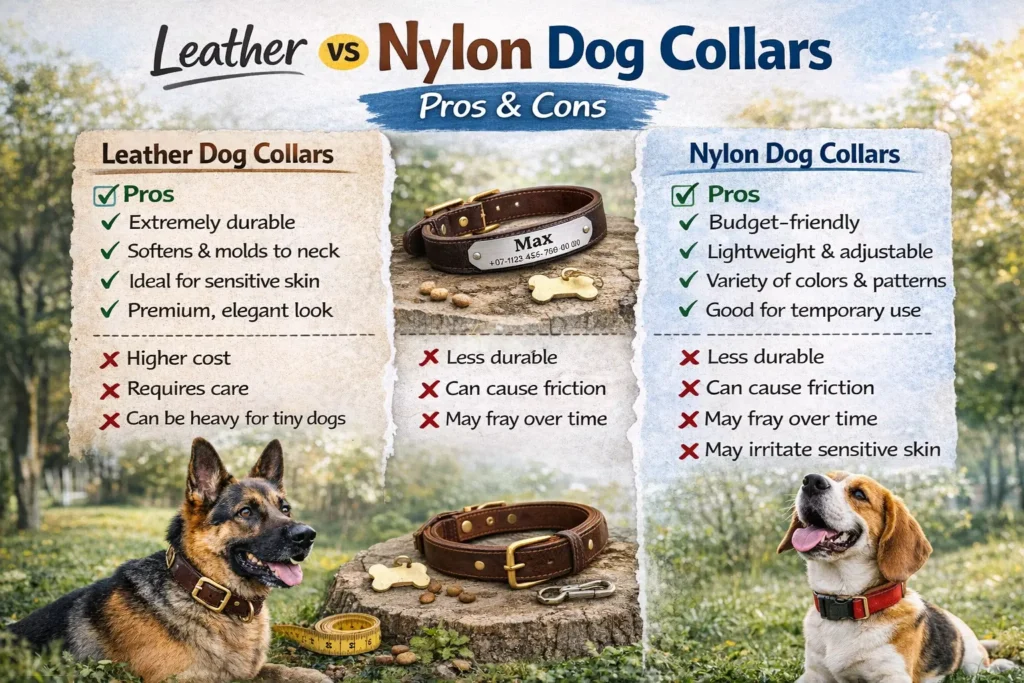
The material of the collar determines durability, comfort, appearance, and long-term value.
Let’s compare the most common types.
Leather Dog Collars (Premium Choice)
Leather collars are considered the gold standard for durability and elegance.
Advantages:
- Extremely durable
- Softens over time
- Reduces skin irritation
- Long-lasting (years if maintained)
- Premium appearance
- Ideal for sensitive skin
Leather naturally molds to your dog’s neck over time, increasing comfort.
If you’re looking for durable and elegant choices, explore:
You can also read our complete material breakdown in our Full Leather Dog Collar Guide.
Nylon Dog Collars (Budget-Friendly Option)
Nylon collars are lightweight and affordable.
Pros:
- Budget-friendly
- Many color options
- Lightweight
- Good for temporary use
Cons:
- Can cause friction
- Less durable than leather
- May fray over time
- Can irritate sensitive skin
Nylon is suitable for short-term use but not ideal for heavy pullers.
Metal or Chain Collars (Training-Specific)
These are usually used for training and not recommended for daily wear without professional guidance.
They can:
- Cause neck strain
- Lead to injury if misused
- Increase stress
For daily wear, comfort-based collars are better.
Choosing the Right Collar Based on Your Dog’s Size & Breed
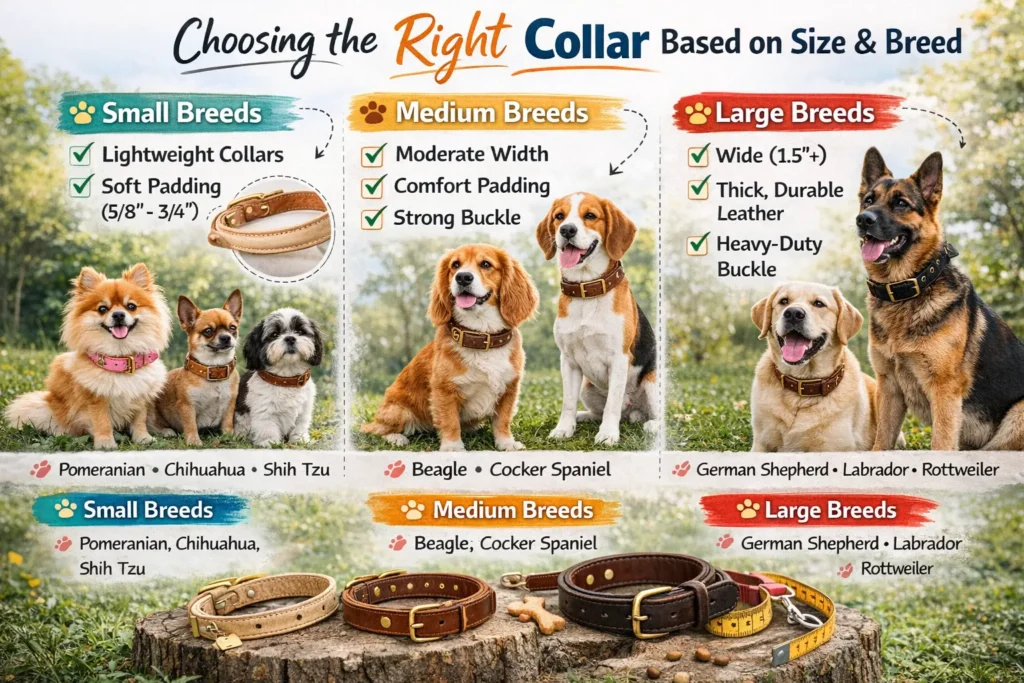
Every breed has different neck structure, coat type, and strength level.
Small Breeds (Pomeranian, Chihuahua, Shih Tzu)
Small dogs need:
- Lightweight collars
- Soft inner padding
- Thin width design
Avoid heavy buckles that strain the neck.
Medium Breeds (Beagle, Cocker Spaniel)
Medium dogs need:
- Moderate width collars
- Strong buckle
- Comfortable padding
Leather works exceptionally well for this category.
Large & Strong Breeds (German Shepherd, Labrador, Rottweiler)
Large dogs require:
- Wide collar (1.5 inch+)
- Thick durable leather
- Reinforced stitching
- Heavy-duty metal buckle
For powerful breeds, we recommend exploring our Leather Dog Collar with Leash sets for maximum control and durability.
How Tight Should a Dog Collar Be?
Proper fit is crucial.
The Two-Finger Rule
You should be able to insert two fingers between collar and neck.
If:
- You can insert 3–4 fingers → Too loose
- You cannot insert 2 fingers → Too tight
Signs of Wrong Fit
Too Tight:
- Red marks
- Fur flattening
- Scratching frequently
- Coughing during walks
Too Loose:
- Collar rotates easily
- Dog slips out
- ID tags hang too low
Always re-check fit monthly.
Should You Choose Personalized Collars?
Personalized collars add safety and style.
Benefits:
- Immediate identification
- No dangling tag noise
- Permanent engraving
- Cleaner appearance
If safety is a priority, check our Personalized Leather Dog Collar Category.
Common Mistakes Dog Owners Make When Buying Collars
- Choosing based on looks only
- Ignoring neck measurement
- Buying too thin collar for large dogs
- Selecting cheap low-quality material
- Not checking stitching strength
- Ignoring growth for puppies
Avoiding these mistakes ensures long-term comfort and safety.
When Should You Replace a Dog Collar?
Replace if you notice:
- Cracks in leather
- Fraying nylon
- Loose buckle
- Rusting metal
- Size no longer fits
High-quality leather collars can last several years with proper care.
Final Buying Checklist (Before You Purchase)
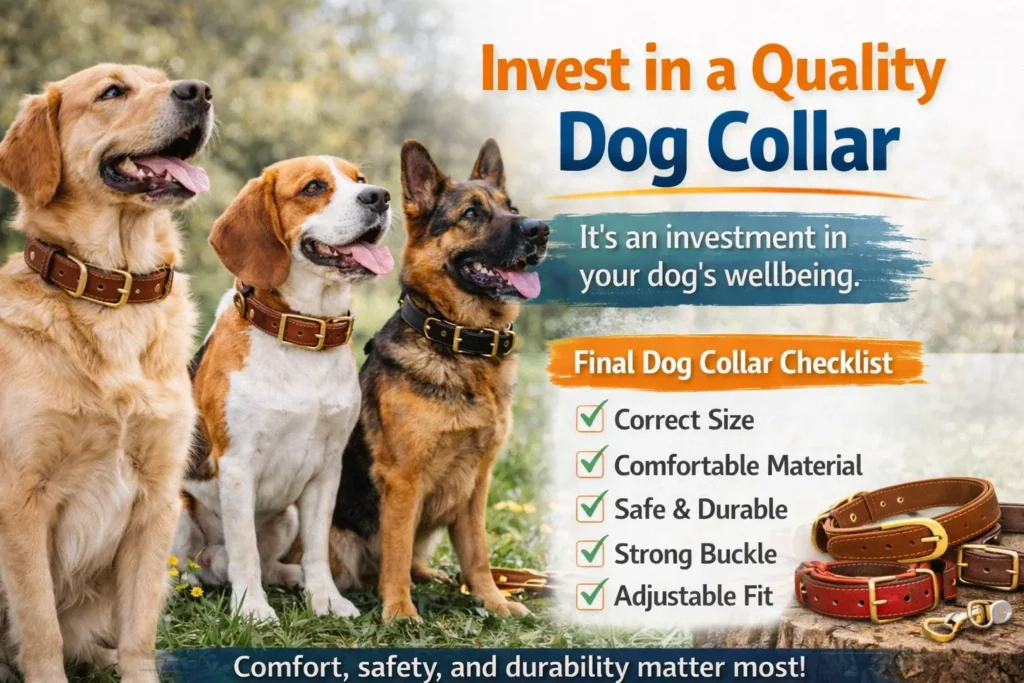
Before buying, confirm:
✔ Correct neck measurement
✔ Proper width for breed
✔ Durable material
✔ Strong buckle
✔ Adjustable holes
✔ Comfortable inner lining
✔ Personalized option (if needed)
If you want long-term durability and premium comfort, explore our complete Leather Dog Collar Category for hand-crafted options designed for safety and style.
Final Thoughts
Choosing the right dog collar is not a small decision. It directly affects your dog’s safety, comfort, and daily experience.
Measure properly.
Choose quality material.
Prioritize comfort over trends.
Match collar width to breed strength.
Invest in durability.
A premium collar is not an expense — it’s an investment in your dog’s wellbeing.
Frequently Asked Questions About Choosing the Right Dog Collar
1. How do I know what size dog collar to buy?
The best way to determine the correct collar size is to measure your dog’s neck using a soft measuring tape. Wrap it around the base of the neck where the collar naturally sits. After measuring, apply the “two-finger rule” — you should be able to comfortably slide two fingers between the collar and your dog’s neck.
If your dog is still growing, especially puppies, choose an adjustable collar with multiple sizing holes to allow room for growth. Avoid guessing the size, as collars that are too tight can cause discomfort, while collars that are too loose may slip off and pose safety risks.
For long-term durability and accurate sizing options, leather collars with adjustable buckles are often a reliable choice.
2. Is leather or nylon better for a dog collar?
Both materials have advantages, but leather is generally considered more durable and comfortable for long-term use.
Leather collars:
- Last longer
- Soften over time
- Mold to your dog’s neck
- Reduce skin irritation
- Provide a premium look
Nylon collars:
- Are more affordable
- Come in many colors
- Are lightweight
- May wear out faster
- Can cause friction in sensitive dogs
If your dog has sensitive skin or pulls strongly on walks, leather is typically the better investment. Nylon can be suitable for temporary or lightweight use.
3. How tight should a dog collar be?
A dog collar should fit snugly but not tightly. The standard guideline is the two-finger rule. You should be able to slide two fingers comfortably between the collar and your dog’s neck.
Signs the collar is too tight:
- Red marks on skin
- Hair loss around neck
- Frequent scratching
- Coughing or choking sounds during walks
Signs it is too loose:
- Collar rotates easily around neck
- Dog can slip out of it
- Tags hang too low
Regularly check the fit, especially if your dog is still growing or gaining weight.
4. What type of collar is best for large dogs?
Large and strong breeds require:
- Wider collars (1.5 inches or more)
- Thick durable material
- Strong metal buckle
- Reinforced stitching
Thin or lightweight collars are not suitable for powerful breeds because they can break under pressure. Heavy-duty leather collars are often recommended for large dogs due to their strength and durability.
Always ensure the collar width matches the size and strength of your dog.
5. Are personalized dog collars worth it?
Yes, personalized dog collars offer both safety and convenience. Instead of relying on a dangling ID tag that can fall off, engraved nameplates provide permanent identification.
Benefits include:
- Reduced noise (no jingling tags)
- Immediate visibility of contact information
- Clean and elegant look
- Less risk of tag loss
For active dogs or outdoor adventures, personalized collars can add an extra layer of security.
6. How often should I replace my dog’s collar?
You should replace your dog’s collar if you notice:
- Cracking or stiff leather
- Fraying nylon
- Rusting metal parts
- Loose stitching
- Broken buckle
- Size no longer fits
High-quality leather collars can last several years if properly maintained. However, always inspect your dog’s collar monthly to ensure it remains safe and secure.
7. Can a wrong collar cause health problems?
Yes. An improperly fitted or poor-quality collar can lead to:
- Skin irritation
- Fur loss
- Pressure sores
- Neck strain
- Breathing restriction
- Behavioral resistance to walks
That is why choosing the correct size, width, and material is essential. Comfort should always be the top priority.
8. What collar is best for puppies?
Puppies need lightweight, adjustable collars that allow room for growth. Soft materials are important to avoid irritation on delicate skin.
Since puppies grow quickly, it’s important to check collar tightness every 2–3 weeks and adjust as needed. Never buy a collar that is already tight on a growing puppy.