
How to Measure Dog Collar may seem simple, but it’s one of the most important decisions you can make for your dog’s comfort and safety. A collar that fits well allows your dog to move freely, walk comfortably, and stay secure during everyday activities. On the other hand, a poorly sized collar can cause irritation, slipping, or even injury over time.
Many dog owners guess collar sizes based on breed or weight, which often leads to problems. Dogs of the same breed can have very different neck sizes, coat thickness, and body shapes. That’s why learning how to measure a dog collar correctly is essential before buying one—especially when choosing long-lasting options like leather dog collars or custom-made personalized dog collars.
As dog owners and collar sellers, we’ve seen many cases where a collar looked fine at first but caused discomfort later because it wasn’t measured properly. Even high-quality collars, including leather dog collars , can become a problem if the size is slightly off, which is why correct measurement matters more than most people think.
In this complete size guide, you’ll learn exactly How to Measure Dog Collar neck, how to read collar size charts, what mistakes to avoid, and how to choose the right collar after measuring. This guide works for puppies, adult dogs, and senior dogs of all sizes—whether you’re buying everyday collars or personalized dog collars
Why Correct Dog Collar Size Matters
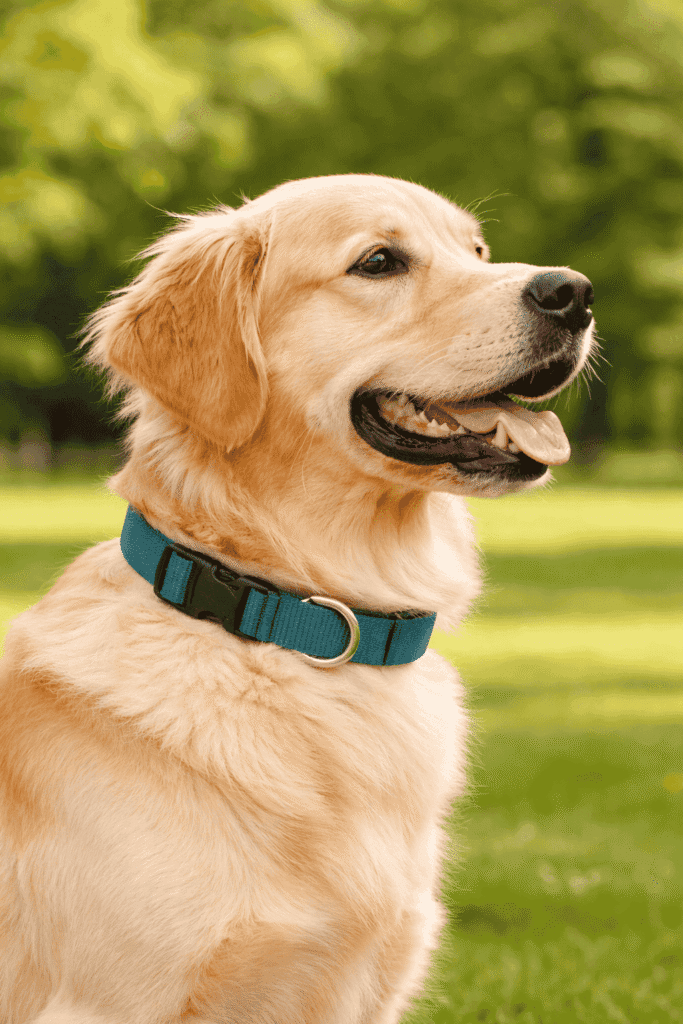
A properly sized dog collar does much more than just hold an ID tag. It affects your dog’s daily comfort, behavior, and safety. When a collar fits correctly, it rests comfortably around the neck without pressing into the skin or sliding around too much.
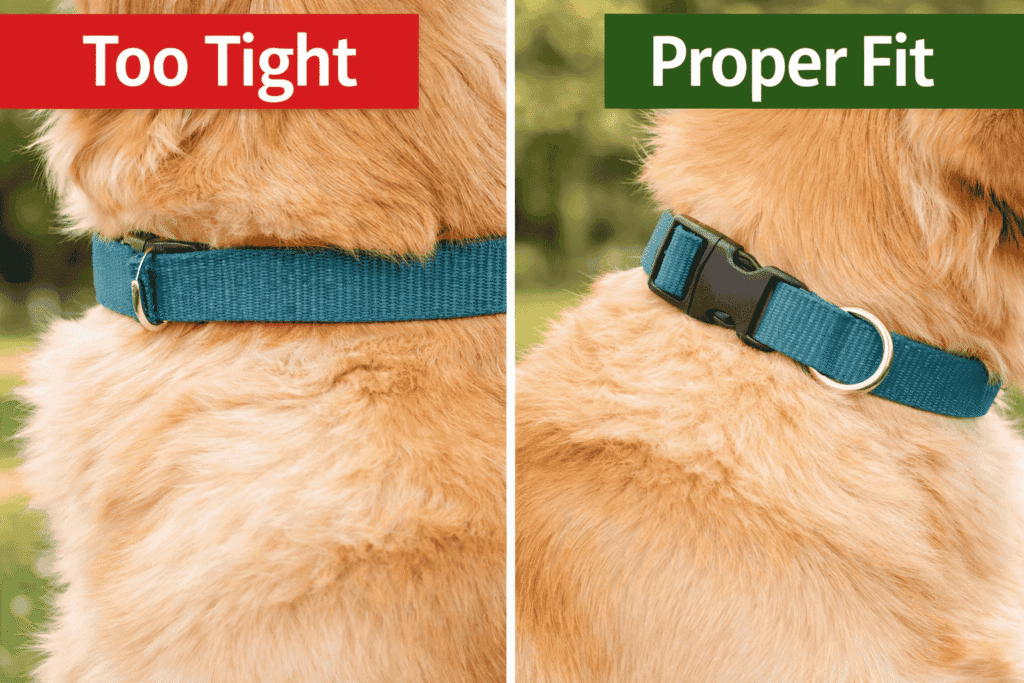
If a collar is too tight, it can cause constant rubbing, hair loss, skin irritation, or pressure on your dog’s throat. Over time, this can lead to discomfort, coughing, or restricted breathing, especially during walks. Tight collars are particularly risky for dogs that pull on the leash.
On the other hand, a collar that’s too loose can slip over your dog’s head or rotate constantly. This increases the risk of your dog escaping during walks or losing identification if they wander off. A loose collar can also catch on objects, which may cause accidents.
Measuring your dog’s neck properly helps prevent all of these issues. It ensures the collar stays secure while still allowing your dog to move, play, and rest comfortably throughout the day.
What You Need Before Measuring a Dog Collar
Before you start measuring, take a moment to prepare. Having the right tools and a calm environment will make the process easier and more accurate.
The best tool for measuring a leather dog collar is a soft, flexible measuring tape, the kind used for sewing. It easily wraps around your dog’s neck and gives an exact measurement. If you don’t have one, a piece of string, ribbon, or even a shoelace can work just as well. You’ll also need a ruler or tape measure to check the length afterward.
It’s important that your dog is calm and standing naturally while you measure. Measuring when your dog is sitting, lying down, or moving around can result in incorrect sizing. For energetic dogs, having treats nearby can help keep them still and relaxed.
Make sure you measure directly against your dog’s neck, not over an old collar. Existing collars may already be stretched, worn, or adjusted incorrectly.
We’ve also noticed that collars made from natural materials, such as leather, may soften and stretch slightly over time. Because of this, it’s always smart to choose a collar that offers a little adjustment room rather than a tight, exact fit.
How to Measure Dog Collar Step by Step
Measuring a dog’s neck is simple when done correctly. Follow these steps carefully to get the most accurate result.
Measuring with a Measuring Tape
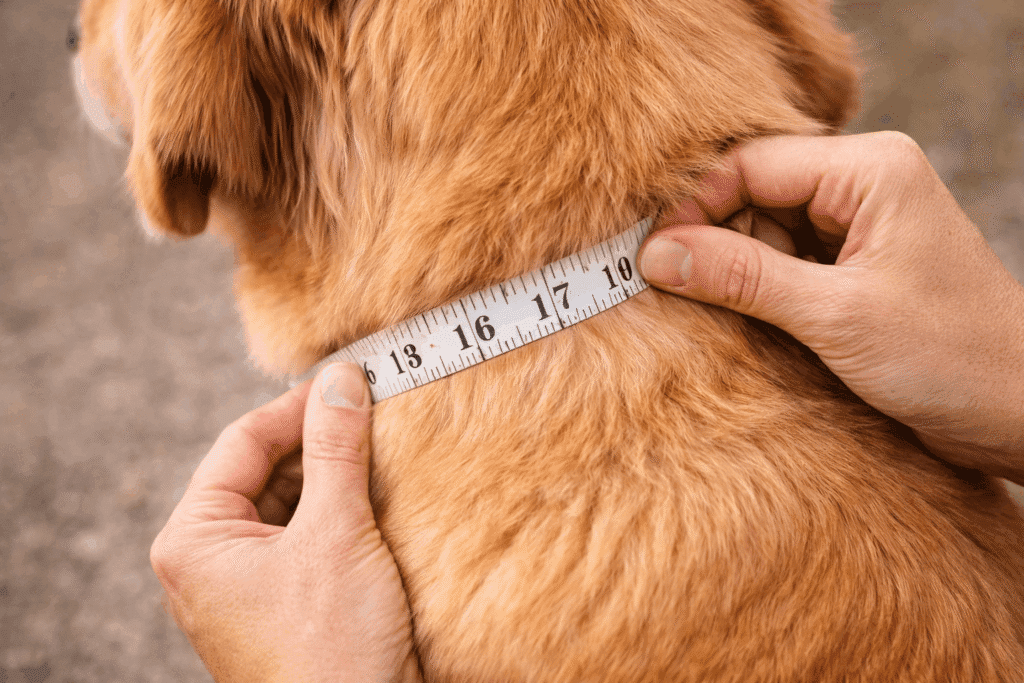
Start by placing the measuring tape around the middle of your dog’s neck, where the collar normally sits. This is usually a little lower than where the neck meets the head, not too close to the shoulders.
Wrap the tape snugly around the neck, but do not pull it tight. You should be able to slide two fingers comfortably between the tape and your dog’s neck. This space ensures the collar won’t be restrictive while still staying secure.
Once the tape is in place, note the measurement. Write it down in inches or centimeters, depending on the sizing chart you plan to use. This number represents your dog’s neck size.
Measuring Without a Measuring Tape
If you don’t have a measuring tape, use a piece of string or ribbon. Wrap it around your dog’s neck in the same position as described above. Mark where the ends meet, then lay the string flat and measure it with a ruler.
This method is just as effective as using a measuring tape, as long as you keep the string snug but not tight.
Dog Collar Size Chart Explained
Once you have your dog’s neck measurement, the next step is choosing the correct size from a collar size chart. Most dog collars are labeled as small, medium, large, or extra-large, each covering a specific range of neck sizes.
Always compare your measurement to the size chart provided for the collar you’re buying. Different brands and collar styles may vary slightly in sizing. Never assume that a “medium” collar will fit just because your dog is medium-sized.
If your dog’s measurement falls between two sizes, it’s usually better to choose the larger size. A slightly larger collar can be adjusted down, while a collar that’s too small may not fit at all.
Also pay attention to adjustability. Collars with multiple adjustment holes offer more flexibility and can accommodate small changes in your dog’s size over time.
Common Mistakes to Avoid When Measuring a Dog Collar
One of the most common mistakes dog owners make is measuring the neck too tightly. A collar should never press into the skin or restrict movement. Always remember the two-finger rule to ensure comfort.
Another mistake is measuring over thick fur without considering compression. Dogs with long or dense coats may need a little extra room so the collar doesn’t become tight when the fur settles.
Measuring only once is also a common issue. Dogs move, breathe, and shift posture, which can affect measurements. Taking the measurement twice helps confirm accuracy.
Finally, avoid choosing a collar based solely on breed, age, or weight. These factors don’t account for individual differences in neck size and body shape.
How Often Should You Recheck Your Dog’s Collar Size?
A dog’s collar size isn’t something you measure once and forget. Puppies grow quickly, and even adult dogs can experience changes in weight, muscle, or coat thickness.
For puppies, it’s important to check collar fit every few weeks. For adult dogs, checking every few months is usually enough. You should also recheck the fit if you notice signs like redness, hair loss, or the collar leaving marks on the neck.
Seasonal changes can also affect fit. Dogs with thick winter coats may need slight adjustments when shedding in warmer months. Regularly checking the collar ensures it stays comfortable year-round.
Choosing the Right Collar After Measuring
Once you’ve measured your dog’s neck correctly, selecting the right collar becomes much easier. Look for collars made from durable materials with smooth edges that won’t irritate your dog’s skin.
Adjustability is key. A good collar should allow small adjustments without becoming loose or uneven. Strong hardware, such as sturdy buckles and secure D-rings, ensures reliability during daily walks.
The right collar should feel comfortable to your dog while giving you confidence that it will stay in place. Proper measurement ensures the collar supports your dog’s natural movement and everyday activities.
Puppy vs Adult Dog Collar Measurement Tips
Measuring a puppy’s collar requires extra attention because puppies grow quickly. A collar that fits today may become tight within a few weeks. Always leave enough adjustment space and check the fit regularly as your puppy grows.
Adult dogs usually have more stable neck sizes, but changes in weight, muscle, or coat thickness can still affect collar fit. For senior dogs, comfort is especially important, so make sure the collar isn’t pressing against sensitive areas of the neck.
Final Thoughts on Measuring Dog Collars
Knowing how to measure dog collar correctly is a simple skill that makes a big difference in your dog’s comfort and safety. Taking a few minutes to measure properly helps avoid common problems like slipping, rubbing, or discomfort.
By following the steps in this guide, using accurate measurements, and choosing the right size based on a proper size chart, you can ensure your dog’s collar fits securely and comfortably. A well-fitted collar not only looks better but also helps your dog feel confident and at ease during everyday life.
Frequently Asked Questions About Dog Collar Sizing
❓ How tight should a dog collar be?
A dog collar should be snug but not tight. You should be able to comfortably fit two fingers between the collar and your dog’s neck. This ensures the collar stays secure without restricting movement or breathing.
❓ Is it better for a dog collar to be loose or tight?
A collar should never be tight. A slightly loose collar is safer than a tight one, but it should still fit securely enough that it doesn’t slip over your dog’s head.
❓ Do dog collars stretch over time?
Some collars, especially those made from leather or fabric, can stretch slightly with regular use. This is why adjustable collars are recommended, as they allow you to maintain a proper fit over time.
❓ How often should I check my dog’s collar size?
Puppies should have their collar size checked every few weeks. Adult dogs should be checked every few months, or whenever you notice weight changes, coat changes, or signs of discomfort.
❓ Can I use my dog’s weight to choose a collar size?
Weight alone is not a reliable way to choose a collar size. Dogs with the same weight can have very different neck sizes. Always measure your dog’s neck for the most accurate fit.
❓ What happens if a dog collar is too tight?
A collar that’s too tight can cause skin irritation, hair loss, discomfort, coughing, or restricted breathing. Over time, this can lead to serious neck or throat issues.