
1. Introduction
Dog tags may seem like a small detail, but they play a huge role in your dog’s safety. In a situation where your dog accidentally wanders off or gets lost, a simple tag attached to their collar can make the difference between a quick reunion and a stressful search.
Imagine this: your dog slips out of the gate and ends up a few streets away. A kind stranger finds them—but without identification, there’s no easy way to contact you. Now imagine the same situation with a properly attached dog tag displaying your phone number. Within minutes, you get a call and your pet is safely back home. That’s the power of a dog tag.
In this guide, you’ll learn:
- A step-by-step method to attach a dog tag correctly
- The different types of tags and attachment options available
- Common mistakes to avoid that could cause tags to fall off
By the end, you’ll know exactly how to secure your dog’s tag properly and keep it in place.
2. Why Dog Tags Are Important
Dog tags are one of the simplest yet most effective ways to protect your pet. They act as your dog’s first line of identification, especially in unexpected situations.
The most important function of a dog tag is to display key information such as your dog’s name and your phone number. If your dog gets lost, anyone who finds them can contact you immediately without needing special equipment. This makes the recovery process much faster compared to relying only on a microchip.
In some regions, having an identification tag on your dog’s collar is not just recommended—it’s legally required. Even where it’s not mandatory, it’s considered a responsible practice for pet owners.
While microchips are a great backup, they are not always instantly accessible. A vet or shelter needs to scan the chip, which takes time. A visible tag, on the other hand, provides instant information.
Most importantly, dog tags give you peace of mind. Knowing that your dog has clear identification attached at all times reduces anxiety and ensures that even in the worst-case scenario, there’s a strong chance of a safe return.
👉 For better durability and style, many owners prefer using a personalized leather dog collar with built-in or secure tag options.
3. Types of Dog Tags
Choosing the right dog tag is just as important as attaching it properly. Different types offer different benefits depending on your dog’s needs and your preferences.
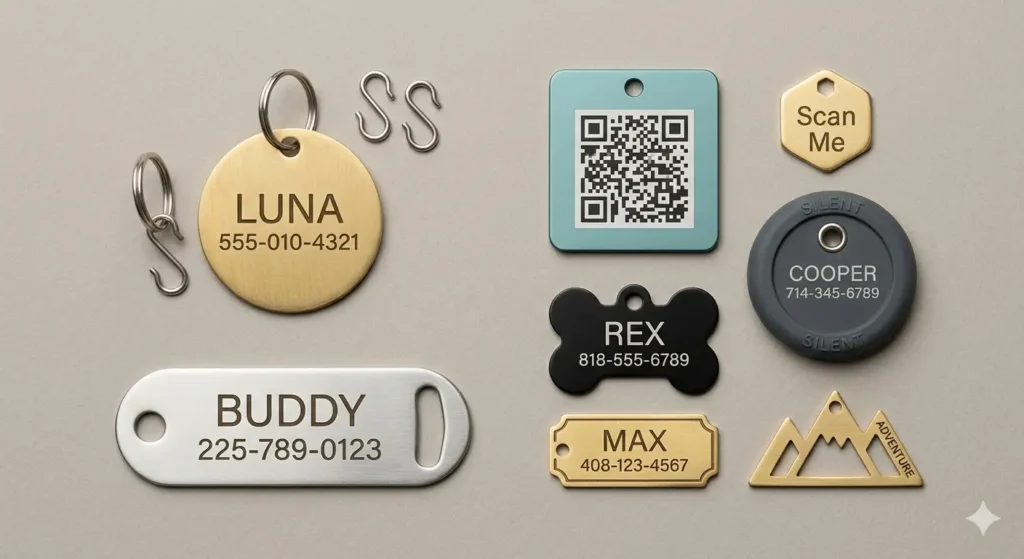
a) Flat Engraved Tags
These are the most common type of dog tags. They are typically made from metal and engraved with your dog’s details.
- Lightweight and affordable
- Easy to attach using a split ring
- Available in many shapes and styles
b) Slide-On Tags
Slide-on tags are designed to fit directly onto the collar without the need for a ring.
- Completely silent (no jingling noise)
- More secure since they don’t dangle
- Best suited for specific collar widths
c) QR Code / Smart Tags
These are modern, tech-based tags that store digital information.
- Can hold detailed info like address, medical data, and contacts
- Scannable via smartphone
- Ideal for tech-savvy pet owners
d) Silent Tags
These tags come with rubber coatings or covers to reduce noise.
- Great for dogs sensitive to sound
- Prevents constant jingling
- Adds a layer of protection to the tag
🔍 Comparison Table
| Tag Type | Noise Level | Security | Info Capacity | Best For |
|---|---|---|---|---|
| Flat Engraved | Medium | Good | Basic | Everyday use |
| Slide-On | Silent | Very High | Basic | Active dogs |
| QR Code / Smart | Silent | High | Advanced | Tech-friendly owners |
| Silent (Rubber) | Low | Good | Basic | Noise-sensitive dogs |
Choosing the right tag depends on your dog’s activity level, comfort, and how much information you want to include.
4. Types of Dog Collars (Important for Context)
Not all collars are the same, and the type you choose affects how easily and securely you can attach a dog tag.
a) Buckle Collars
These are traditional collars with a belt-style buckle.
- Strong and secure
- Ideal for everyday use
- Works well with all types of tags
b) Quick-Release Collars
These collars use a plastic or metal clasp for easy removal.
- Convenient for quick use
- Lightweight
- Compatible with most tag attachments
c) Martingale Collars
Often used for training, especially for dogs that tend to slip out of collars.
- Provides gentle control
- Limited space for tags depending on design
- Needs proper placement of tags
d) Leather Dog Collars
Leather collars are a premium option known for durability and style.
- Long-lasting and comfortable
- Strong D-rings for secure tag attachment
- Ideal for both function and aesthetics
If you’re looking for quality and durability, leather options are highly recommended, such as:
- black leather dog collar
- brown leather dog collar
- soft leather dog collar
These collars not only look premium but also provide a strong and reliable base for attaching dog tags securely.
5. Tools You May Need
Attaching a dog tag is simple, but having the right tools can make the process much easier and more secure.
Split Ring (Most Common)
This is the small metal ring that usually comes with dog tags.
- Works like a keychain
- Secure and widely used
- Ideal for everyday attachment
Pliers (Optional but Helpful)
Pliers can help you open tight rings more easily.
- Useful if the ring is stiff
- Prevents finger strain
- Helps ensure a tight fit
Keyring Opener Tool
A small tool specifically designed to open split rings.
- Makes the process quicker
- Reduces risk of bending the ring
- Great for beginners
Carabiner Clip (Alternative)
A clip-style attachment that can replace split rings.
- Easy to attach and remove
- Convenient for switching tags
- Slightly less secure than split rings
Using the right tools ensures that your dog’s tag is not only attached properly but also stays in place over time.
6. Step-by-Step Guide: How to Put a Dog Tag on a Collar
Attaching a dog tag may seem simple, but doing it correctly ensures it stays secure and doesn’t fall off over time. Follow these steps for a proper and reliable attachment.
Step 1: Choose the Right Ring or Clip
Start by selecting how you want to attach the tag. The most common option is a split ring, which works like a keychain and provides a strong, secure hold. Alternatively, you can use a clip, which is quicker to attach but may not be as secure for very active dogs.
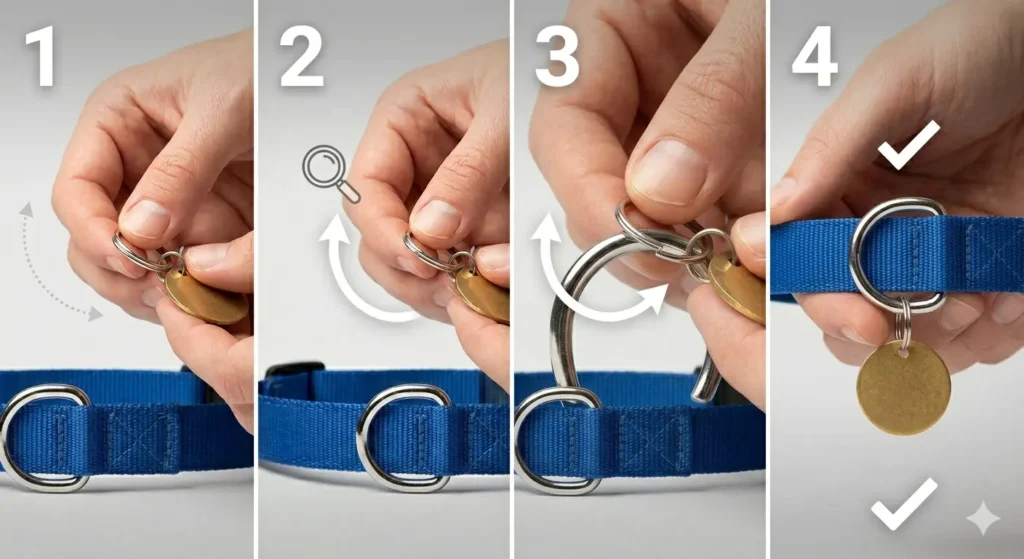
Step 2: Open the Split Ring
Hold the split ring firmly and use your fingernail to slightly separate the ends. If it feels too tight, you can use a keyring opener tool or pliers to make it easier.
Tip: Avoid forcing the ring open too much, as this can weaken its shape and reduce its strength.
Step 3: Slide the Tag Onto the Ring
Insert the hole of the dog tag into the split ring and begin rotating it around the ring—just like you would add a key to a keychain. Continue rotating until the tag is fully threaded onto the ring.
Step 4: Attach the Ring to the Collar D-Ring
Next, take the split ring (with the tag attached) and thread it onto the collar’s D-ring—the metal loop where the leash connects. Rotate it again until it is fully secured onto the collar.
Step 5: Check Placement & Security
Once attached, gently pull on the tag to ensure it’s firmly in place. It should move slightly but not feel loose or unstable. Make sure there are no gaps in the ring where it could slip out.
👉 Pro Tip: Always attach the tag next to the leash ring (D-ring). This keeps it in a balanced position and reduces unnecessary movement or wear.
7. Alternative Ways to Attach Dog Tags
While split rings are the most common method, there are several alternative ways to attach dog tags depending on your preference and your dog’s lifestyle.
Slide-On Tags
These tags slide directly onto the collar and don’t require any rings or clips. They are completely silent and highly secure since they don’t dangle. However, they only work with collars of specific widths.
S-Hook Attachment
An S-hook is a small metal hook that connects the tag to the collar. It’s easy to attach and remove, but it must be properly closed to prevent it from slipping off.
Tag Clips
Clips are a convenient option for pet owners who frequently change tags. They allow quick attachment and removal but may not be as strong as split rings for highly active dogs.
Riveted Tags (Permanent Option)
Some tags can be permanently fixed to the collar using rivets. This is the most secure option, as the tag cannot fall off—but it also means you won’t be able to remove or replace it easily.
Each method has its pros and cons, so the best choice depends on your dog’s activity level and how often you plan to change tags.
8. Common Mistakes to Avoid
Even though attaching a dog tag is simple, small mistakes can lead to it falling off or becoming uncomfortable for your dog.
One of the most common mistakes is using cheap or low-quality split rings. These can bend or break over time, especially if your dog is active. Always choose strong, durable metal rings.
Another mistake is attaching the tag too loosely. If the ring is not properly closed or secured, the tag can slip off without you noticing.
Overloading the collar with multiple tags is also a problem. While it may seem useful to include extra information, too many tags can create unnecessary weight and noise, which may irritate your dog.
Speaking of noise, many owners ignore the constant jingling sound tags can make. For some dogs, this can be stressful or distracting.
Finally, many people forget to check the tag regularly. Wear and tear can weaken the attachment over time, increasing the risk of losing it.
Avoiding these mistakes ensures your dog’s tag stays secure and comfortable.
9. How to Stop Dog Tag Noise (Bonus Section)
The jingling sound of dog tags may not bother you, but it can be irritating for your dog—especially if they are sensitive to noise.
One of the easiest solutions is to use a tag silencer. These are rubber or silicone covers that fit around the tag and reduce or completely eliminate noise.
Another option is switching to slide-on tags, which don’t hang or move at all. Since they sit flat on the collar, there’s no sound.
You can also use rubber holders or coated tags, which provide a softer surface and reduce metal-to-metal contact.
Reducing noise not only improves your dog’s comfort but also prevents distractions during training or rest.
10. How to Ensure Your Dog Tag Stays Secure
Keeping your dog’s tag secure requires a bit of regular attention, but it’s worth the effort.
Start by checking the tag and ring regularly, especially if your dog is active or spends time outdoors. Look for signs of bending, rust, or loosening.
Always use strong, high-quality metal rings instead of cheap alternatives. Durable materials last longer and provide better security.
If you notice any wear and tear, replace worn-out parts immediately. A damaged ring can fail at any time.
Also, avoid materials that are prone to rust, especially if your dog is often exposed to water. Stainless steel or coated metals are better options.
A few simple checks can make a big difference in ensuring your dog’s identification stays intact.
11. FAQs
Q1: Where should a dog tag be placed on a collar?
Dog tags should be attached to the collar’s D-ring, which is the same loop used for attaching the leash. This ensures proper positioning and security.
Q2: Can I put multiple tags on a collar?
Yes, you can attach multiple tags, such as a rabies tag and an ID tag. However, it’s best to keep it minimal to avoid excess weight and noise.
Q3: Do all collars support slide-on tags?
No, slide-on tags only work with certain collar widths and designs. Always check compatibility before choosing this option.
Q4: How tight should the tag be attached?
The tag should be securely attached so it doesn’t fall off, but it should still be able to move slightly on the ring without being overly tight.
12. Conclusion + CTA
Attaching a dog tag to a collar might seem like a small task, but it plays a critical role in your dog’s safety. A properly secured tag ensures that if your dog ever gets lost, there’s a quick and easy way for someone to contact you.
By following the correct steps, choosing the right attachment method, and avoiding common mistakes, you can make sure your dog’s tag stays in place at all times. Regular checks and using durable materials further increase reliability.
If you want the best combination of security, comfort, and style, choosing a high-quality collar is just as important as the tag itself.
👉 Explore our collection of durable leather dog collars designed for secure tag attachment and long-lasting use.
👉 Upgrade to a personalized dog collar for a cleaner look and built-in identification.
A small step today can make a big difference when it matters most. 🐾