
Getting a new puppy is one of the happiest moments for any dog owner. But along with toys, food, and vet visits, one essential question comes up:
What size collar for puppy?
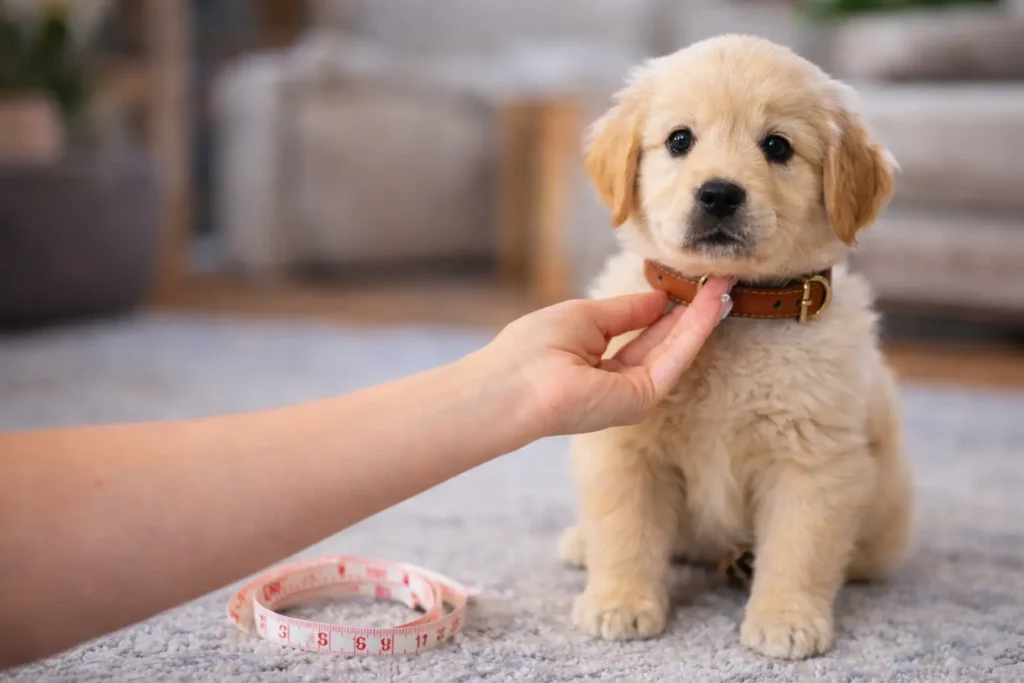
Choosing the correct collar size is not just about looks. It directly affects your puppy’s comfort, safety, training, and long-term neck health. Puppies grow rapidly — sometimes changing collar size every few weeks. Buying the wrong size can cause discomfort, slipping, choking risks, or skin irritation.
In this detailed 2026 guide, we’ll cover everything you need to know:
- How to measure your puppy properly
- Exact sizing charts by weight and age
- Breed-specific collar guidance
- Growth stage recommendations
- Common sizing mistakes
- When to upgrade to leather
- Best collar types for growing puppies
- Internal linking to the best collar options for your pup
Let’s start from the basics.
Why Getting the Right Collar Size for Your Puppy Is So Important
Many new puppy owners assume they can “just estimate” the collar size based on the puppy’s breed or age. That’s one of the most common mistakes — and it can create real problems for your dog.
Puppies grow rapidly, especially in the first 4–6 months. Their neck circumference can change within just a few weeks. Even two puppies of the same breed and age can have different neck sizes.
Guessing the size increases the risk of choosing a collar that is either too tight or too loose — and both situations can negatively affect your puppy’s health and behavior.
Let’s break this down in detail.
What Happens If a Puppy Collar Is Too Tight?
A collar that is too tight does more than just feel uncomfortable. It can cause serious issues over time.
1. Restricted Breathing
A tight collar puts pressure on your puppy’s throat and trachea. Puppies have delicate windpipes, and constant pressure can make breathing uncomfortable — especially during walks or when pulling slightly on a leash.
2. Skin Irritation and Rashes
Puppy skin is much thinner and more sensitive than adult dog skin. A tight collar traps moisture, sweat, and dirt against the skin, which can lead to redness, itching, and even small sores.
3. Fur Loss Around the Neck
If you notice a ring of thinning fur around your puppy’s neck, the collar may be too tight. Continuous friction damages hair follicles and can create permanent patches if ignored.
4. Painful Pressure Points
Collars that press tightly against one spot create pressure points. Over time, this causes tenderness and discomfort. Your puppy may flinch when you touch their neck.
5. Resistance to Wearing the Collar
If your puppy constantly scratches at the collar, tries to bite it off, or becomes restless when wearing it, discomfort may be the reason. This can make early training much harder.
What Happens If a Puppy Collar Is Too Loose?
Many owners think loose is safer than tight — but that’s not true either.
1. Slipping Off During Walks
A loose collar can easily slide over your puppy’s head, especially if they back up or pull suddenly. This creates a dangerous escape risk.
2. Getting Caught on Objects
Loose collars can snag on crate bars, furniture corners, or outdoor objects. This can lead to panic, injury, or choking hazards.
3. Escaping During Training
During early leash training, puppies often pull backward when scared. If the collar is loose, they can slip out instantly.
4. Constant Rotation and Chewing
A collar that rotates too much becomes annoying for the puppy. They may chew on it repeatedly, which can damage the collar and create a choking hazard if pieces break off.
Why Sizing Accuracy Matters More in the First 6 Months
Puppies have:
- Softer skin
- More sensitive fur
- Smaller neck muscles
- Rapid growth cycles
During the first six months, your puppy’s body changes quickly. A collar that fits perfectly today may be tight within three weeks.
That’s why:
✔ You should measure regularly
✔ Check the fit every 1–2 weeks
✔ Use adjustable collars
✔ Follow the proper sizing method
Proper fit is not just about comfort — it’s about safety, health, and training success.
Step-by-Step: How to Measure Your Puppy’s Neck Correctly
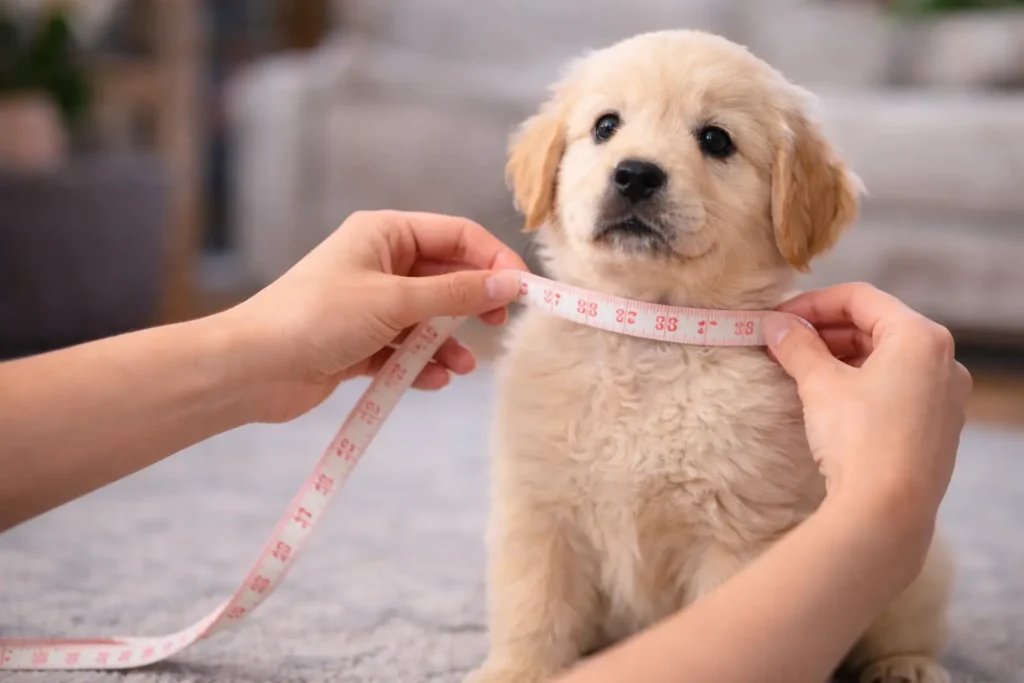
Before buying any collar, always measure. Never rely on breed averages alone.
Even within the same litter, neck sizes can vary.
What You Need
You only need one of the following:
- A soft measuring tape (best option)
OR - A piece of string and a ruler
A soft tailor’s measuring tape gives the most accurate result because it naturally follows the curve of your puppy’s neck.
If you don’t have one, a string works perfectly — just mark the length and measure it against a ruler.
How to Measure Properly (Detailed Guide)
Step 1: Choose the Correct Position
Place the measuring tape around your puppy’s neck where the collar will naturally sit.
This is usually:
- At the base of the neck
- Not too close to the head
- Not too low near the shoulders
Position matters because measuring too high or too low gives inaccurate results.
Step 2: Make It Snug — Not Tight
Wrap the tape gently around the neck.
It should:
- Sit flat against the fur
- Not press into the skin
- Not hang loosely
Avoid pulling tightly. The goal is a natural resting fit.
Step 3: Apply the Two-Finger Rule
Slide two fingers between the measuring tape and your puppy’s neck.
This creates the perfect comfort allowance.
Why two fingers?
- One finger may be too tight.
- Three fingers may be too loose.
- Two fingers provide balanced comfort and safety.
This method ensures proper breathing and prevents friction.
Step 4: Record the Measurement
Write down the measurement in inches (most collar sizes are listed in inches).
Example:
If the measurement reads 9 inches, your puppy’s neck size is 9 inches.
Step 5: Add Growth Allowance (If Adjustable)
If you’re buying an adjustable collar, choose a size range that:
- Includes your puppy’s current measurement
- Allows 1–2 extra inches for growth
For example:
If your puppy measures 9 inches, choose a collar that adjusts from 8–12 inches instead of 9–10 inches.
This prevents needing a replacement too soon.
Final Tip: Recheck Every Few Weeks
Because puppies grow rapidly:
- Measure every 2 weeks (under 6 months)
- Measure monthly (6–12 months)
Consistent checking prevents tight collars and ensures long-term comfort.
General Puppy Collar Size Chart (By Neck Measurement)
| Neck Size (Inches) | Recommended Collar Size |
|---|---|
| 6–8 inches | Extra Small (XS) |
| 8–10 inches | Small (S) |
| 10–12 inches | Small–Medium |
| 12–14 inches | Medium |
| 14–16 inches | Medium–Large |
⚠️ Always choose adjustable collars for puppies.
If you’re browsing premium options, you can check our full collection here:
Leather Dog Collar
What Size Collar for Puppy by Age?
Age is not perfect for sizing, but it helps estimate growth patterns.
8 Weeks Old Puppy
Most small and medium breeds:
- 6–9 inch neck size
- Extra Small or Small collar
Large breeds:
- 8–10 inches
- Small adjustable collar
At this stage, lightweight and flexible material is important.
3 Months Old Puppy
Growth accelerates around this age.
- Small breeds: 7–10 inches
- Medium breeds: 9–12 inches
- Large breeds: 10–14 inches
Check collar fit every 2 weeks.
6 Months Old Puppy
Growth slows but strength increases.
- Small breeds: 8–12 inches
- Medium breeds: 12–15 inches
- Large breeds: 14–18 inches
This is often when owners switch to more durable collars.
For long-term durability, many owners upgrade to:
Soft Leather Dog Collar
What Size Collar for Puppy by Breed?
Small Breeds
- Chihuahua: 6–8 inches
- Yorkie: 6–9 inches
- Pomeranian: 7–9 inches
- Maltese: 7–9 inches
Recommended: Extra Small adjustable collar
Medium Breeds
- Beagle: 8–12 inches
- Cocker Spaniel: 9–12 inches
- Border Collie: 10–14 inches
- Australian Shepherd: 10–14 inches
Recommended: Small–Medium adjustable collar
Large Breeds
- Labrador: 10–14 inches (early months)
- German Shepherd: 10–15 inches
- Golden Retriever: 10–14 inches
- Rottweiler: 12–16 inches
Recommended: Medium adjustable collar
Should You Buy a Bigger Collar So Your Puppy Can Grow Into It?
No.
This is one of the most common mistakes new dog owners make.
Oversized collars:
- Slip off easily
- Create choking hazards
- Allow escape during walks
- Increase chewing behavior
Instead, choose a properly fitted adjustable collar and replace as needed.
Best Material for Puppy Collars (Leather vs Nylon)
Nylon Collars
Pros:
- Lightweight
- Cheap
- Colorful
Cons:
- Causes fur friction
- Absorbs moisture
- Wears out quickly
- Can cause odor buildup
Good for very temporary use only.
Leather Collars (Best Long-Term Choice)
High-quality leather is:
- Breathable
- Durable
- Gentle on skin
- Less irritating
- Long-lasting
As your puppy grows, investing in leather becomes more practical.
You can explore:
When Should You Switch to a Leather Collar?
Most owners switch between 5–8 months when:
- Rapid growth slows
- Leash training increases
- Puppy becomes stronger
- Outdoor activity increases
At this stage, durability matters more.
For extra safety, you may consider a personalized option:
Leather Dog collar with nameplate:
This adds ID protection and looks premium.
Signs Your Puppy’s Collar Is Too Tight
Watch for:
- Red skin marks
- Constant scratching
- Whining
- Hair thinning
- Difficulty swallowing
Check collar weekly.
Signs the Collar Is Too Loose
- Slips over head
- Rotates constantly
- Puppy chews it often
- More than two fingers fit easily
Adjust immediately.
How Often Should You Check Collar Fit?
- 8–16 weeks: Every week
- 4–6 months: Every 2 weeks
- 6+ months: Monthly
Puppies grow fast. What fits today may not fit next month.
Training Considerations
During early leash training:
- Use lightweight collar
- Avoid heavy metal hardware
- Keep sessions short
- Reward calm behavior
As strength increases, consider a leather collar with leash set for better control:
Safety Tips for Puppy Collars
✔ Use breakaway collar if unsupervised
✔ Remove during crate time (if recommended by trainer)
✔ Keep collar clean
✔ Avoid heavy decorative elements
✔ Inspect stitching regularly
Common Mistakes to Avoid
- Guessing size
- Buying oversized collar
- Ignoring growth
- Choosing poor material
- Not adjusting weekly
- Leaving damaged collar on
Avoiding these mistakes protects your puppy’s neck health.
Final Answer: What Size Collar for Puppy?
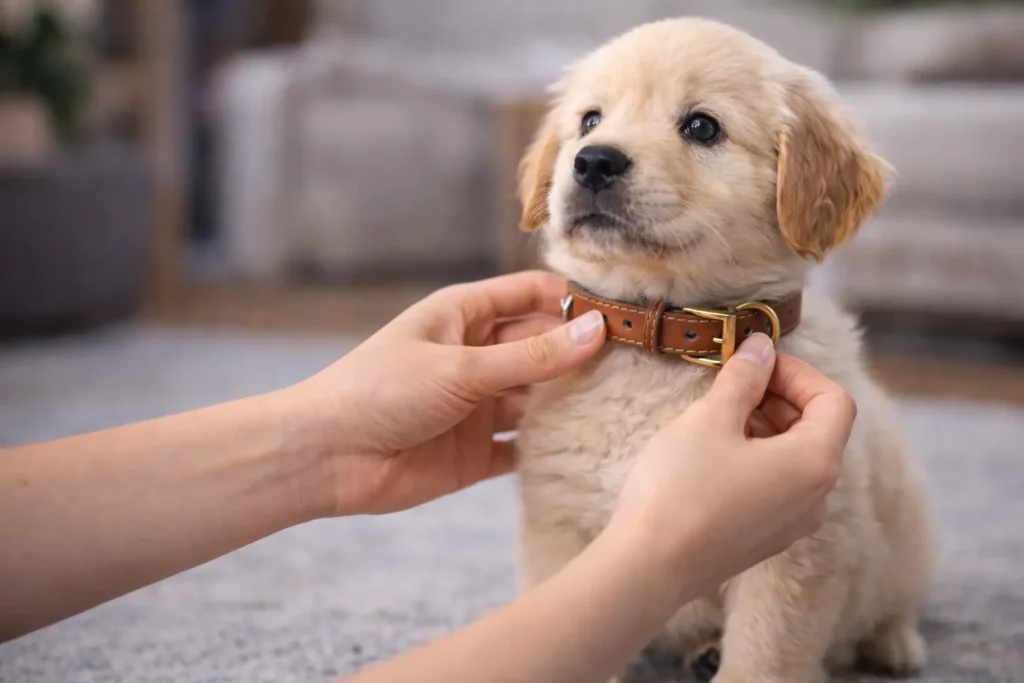
The real answer is:
There is no “one-size-fits-all.”
You must:
- Measure your puppy’s neck
- Follow the two-finger rule
- Choose adjustable design
- Monitor growth
- Upgrade materials as needed
Puppies grow quickly — but comfort and safety should always stay consistent.
If you’re ready to choose a durable long-term option, explore the full collection here: